
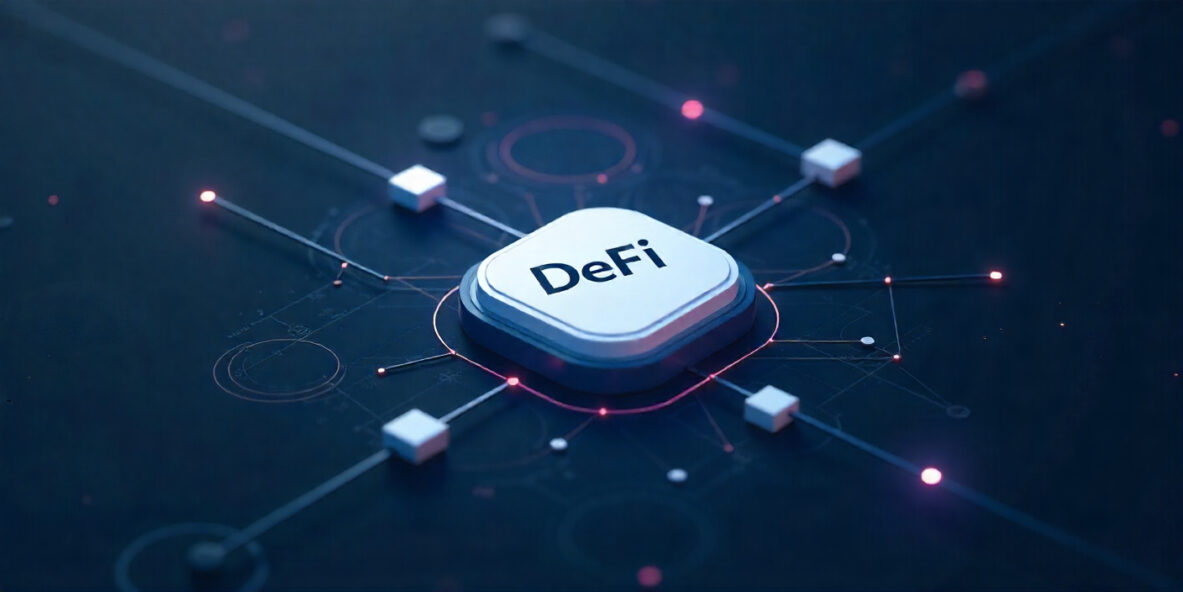

- DeFi uses blockchain and smart contracts to deliver financial services without banks, expanding into stable coins, P2P finance, and real-world assets tokenization.
- Key trends like interoperability, RWAs, and broader blockchain use cases are reshaping how value moves across digital and traditional markets.
- Traders should watch regulatory shifts, rising institutional interest, and new DeFi innovations that will shape the next wave of adoption.
Table of Contents
- What Is DeFi and How It Works Beyond Traditional Crypto
- Key Market Trends Driving the Growth of Decentralized Finance:
- Peer-To-Peer Finance:
- Stablecoin Expansion:
- Blockchain Use Cases Outside of Digital Currencies
- The Rise of Real World Asset Tokenization RWA
- Why It Matters in DeFi?
- Examples for the DeFi and Blockchain Growth:
- Benefits for Investors:
- What Traders Should Watch in the Next Wave of DeFi Adoption?
- Expected trends in DeFi by 2026: Traders should watch
- What is DeFi in simple terms?
- How is DeFi different from crypto?
- What is blockchain used for besides cryptocurrency?
- Is DeFi safe for traders?
- What are RWA takens?
DeFi and blockchain technology are rapidly transforming how financial systems work, offering alternatives that go far beyond traditional cryptocurrencies. As decentralized platforms expand into lending, trading, and real-world asset tokenization, they are reshaping global finance.
This article explores what DeFi is and how it works beyond traditional crypto, key trends that drive the growth of decentralized finance, and blockchain use cases outside digital currencies. It also examines the innovations of asset tokenization, how DeFi challenges traditional finance, the role of smart contracts, the regulatory risks ahead, and what traders should watch in the next wave of DeFi adoption.
What Is DeFi and How It Works Beyond Traditional Crypto
DeFi standards for decentralized Finance, it’s the built-in ecosystem of blockchain. It provides services like financial services such including lending, borrowing, trading, and insurance. Unlike traditional finance, it does not rely on centralized intermediaries such as banks or brokerages.
The key difference is transparency: DeFi transactions are publicly auditable on the blockchain, reducing the risk of fraud. The cost structure differs between TradFi and DeFi: Decentralized finance can minimize costs through automation, while traditional systems’ costs can exceed 5%.
In traditional finance systems, the volatility and smart contract vulnerabilities are not provided, as it’s not regulated, while DeFi does. TradFi provides stability while DeFi and blockchain prioritize innovation and user sovereignty.
With the advanced technology adopted in DeFi, it offers a more accessible alternative, but it still needs to solve scalability issues before, then it can match traditional finance’s large infrastructure.
Key Market Trends Driving the Growth of Decentralized Finance:
Peer-To-Peer Finance:
DeFi and blockchain systems offer direct peer-to-peer (P2P) transactions. The user can communicate directly with the custodians and take full control of their assets.
User gains full financial independence as no central authority can freeze accounts or block transactions. This control is strengthened by self-custody wallets, where individuals hold their own keys instead of relying on a bank. At the end, the risk of a third party mismanaging funds is eliminated. Peer-to-peer lending in DeFi and blockchain systems enables lenders and borrowers to connect directly without a third party.
Stablecoin Expansion:
Stablecoins are becoming one of the strongest drivers of the DeFi and blockchain growth. They offer the same stability of traditional currencies while keeping the speed and accessibility of blockchain.
The usage of stablecoins expanded in several ways:
- Payments: You can use stablecoins as a payment method with low-cost transactions. It’s ideal for online commerce and everyday payments.
- Cross-Border Transfers: users can make international transfers using stablecoins without relying on banks. It’s cheaper, faster than traditional channels.
- Yield Strategies: Many DeFi and blockchain platforms let users earn interest, stake, or provide liquidity using stablecoins.
Blockchain Use Cases Outside of Digital Currencies
Outside of the digital currency, the blockchain has many other use cases that business leaders are adopting because of its innovative capabilities that go beyond cryptocurrency.
- Supply chain management:
Blockchain allows users to track their products, so it can be used by the supply chain department. This can help them identify inefficiencies in the operation. Additionally, it prevents face products from entering the market.
For example, Walmart, a grocery chain that uses such systems to ensure that food is safe and remains unspoiled. - Smart Contracts:
Supply chain partners can use blockchain to check who owns a digital asset and automatically complete agreements without paperwork. This makes the operation faster, reducing the risk of fraud. For example, banks can use blockchain to verify customer identities automatically. - Data security and privacy:
blockchain stores and protects users’ data safely, so it can be used by business partners, creating tamper-proof systems that share data with multiple parties safely.
The Rise of Real World Asset Tokenization RWA
One of the strongest drivers of the growth of DeFi and Blockchain is real-world assets (RWA) tokenization. It means that physical or financial assets can be converted into digital tokens. For example, real estate, bonds, commodities, or invoices can be converted into a digital token that can be traded on blockchain networks.
Why It Matters in DeFi?
The real-world asset brings stability inside DeFi platforms, helping reduce dependence on highly volatile crypto-only markets. This encourages investors because of the RWA’s transparency, automatic settlements, and the ability to divide large assets into smaller, affordable pieces.
Examples for the DeFi and Blockchain Growth:
- U.S. Treasury bills
- Real estate portfolios
- on-chain private credit.
Benefits for Investors:
They benefit from the high liquidity, global accessibility, lower entry barriers, and 24/7 trading. However, DeFi has regulatory compliance challenges, secure custody, and ensuring that each token accurately represents true ownership of the asset.
What Traders Should Watch in the Next Wave of DeFi Adoption?
Traders should watch the path of the tokenization of real-world assets (RWAs), the rise of cross-chain interoperability, and the integration of Artificial Intelligence.
Expected trends in DeFi by 2026: Traders should watch
Real-World Asset (RWA): It’s expected that by 2026, the RWA tokenization will be a dominant part of DeFi. Every investment vehicle, such as real estate and commodities, treasuries, carbon credits, and private equity, will be brought on-chain.

Why RWAs will be dominant by 2026: As it offers stable and predictable yields, better collateralization, institutional trust, and bridging TradFi and DeFi.
Cross-Chain DeFi: DeFi is not limited to one blockchain. Major layer-1 such as Ethereum, Solana, Avalanche, and BNB chain. Layer-2 networks such as Arbitrum, Optimism, Base, and zKSync can now connect and share assets using modern bridges and interoperability tools.
The cross-chain DeFi achieves a unified liquidity across multiple networks, lower fees, better arbitrage, and efficient market and secure smart contracts for multi-chain.
AI-Driven DeFi: It uses machine learning for market prediction, automated yield rebalancing, dynamic risk management, and governance insights.
What is DeFi in simple terms?
DeFi is a system that uses blockchain to offer financial services such as trading, lending, and saving without relying on banks. Everything goes using smart contracts, giving user full control over their money.
How is DeFi different from crypto?
Crypto is a digital coin like Bitcoin, while DeFi is a whole financial ecosystem built on blockchain.
What is blockchain used for besides cryptocurrency?
Beyond crypto, blockchain is used for supply chain tracking, identity verification, smart contracts, digital ownership, healthcare records, voting systems, and tokenization of real-world assets.
Is DeFi safe for traders?
While DeFi offers transparency, it still carries risks and challenges such as hacks, smart contract bugs, scams, and market volatility. Safety level varies depending on choosing trusted and reputable platforms, managing risk and understanding how protocols work.
What are RWA takens?
RWA tokens refer to real-world assets such as real estate, bonds, and commodities on the blockchain. It allows fractional ownership, easier trading, and global access to traditional financial assets through digital tokens.

 AAPL
AAPL 
 MSFT
MSFT  META
META  ^NDX
^NDX  BTC-USD
  XRP-USD
  SUZLON.NS
 INR=X
INR=X  EURUSD=X
  JPY=X
JPY=X  CAD=X
CAD=X